 Adsun
What are forex signals and how do they work? How to read a signal (2026)
Forex signals explained: what a trading signal contains (pair, direction, entry, stop-loss, take-profit), manual vs automated signals, how Telegram delivers them, how to read one and how to judge if signals actually work.
Content owner: Adsun Editorial & Ad Operations Team · Last verified:
Quick answer
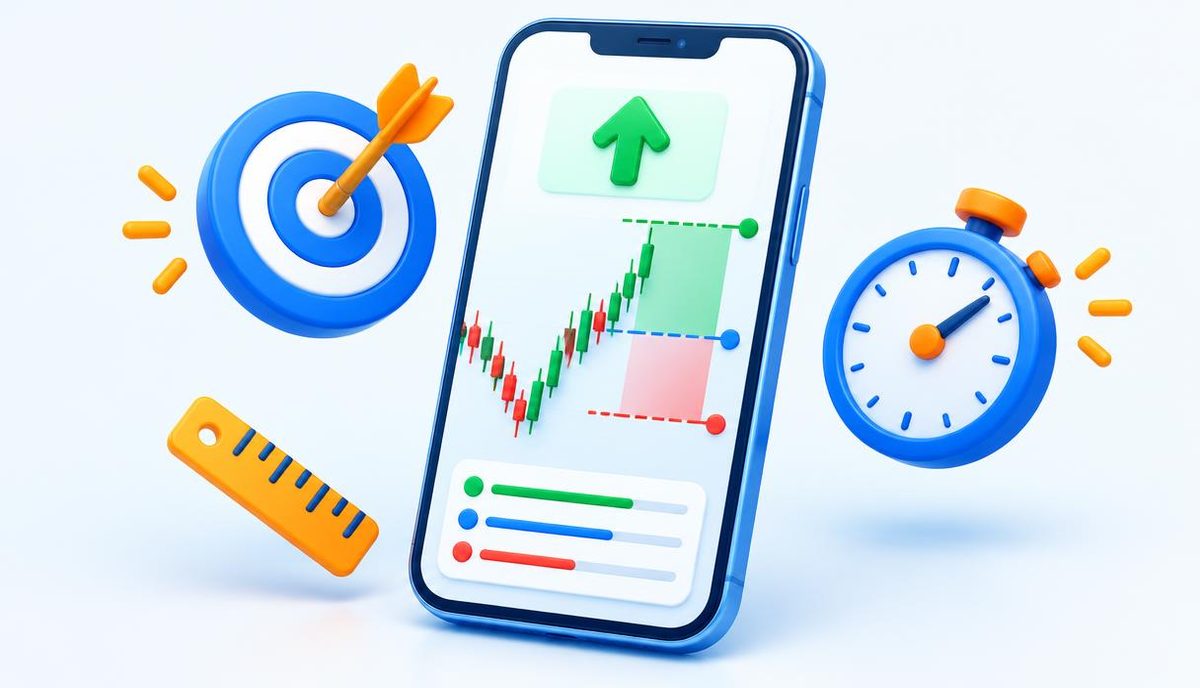
A forex signal is a trade idea that tells you which currency pair (or gold) to buy or sell, at what entry price, with a stop-loss and one or more take-profit levels. Signals are produced by human analysts or automated systems and are usually delivered instantly through Telegram channels, bots, apps or email. A signal is only useful if the provider publishes a complete, verifiable track record — including losses — and if its risk-reward ratio produces positive expectancy. Signals do not remove trading risk; you still decide position size and execution.
Key takeaways
- A complete signal = pair + buy/sell + entry + stop-loss + take-profit (+ time).
- Telegram is the most common delivery channel because alerts arrive instantly.
- Win rate alone is meaningless — expectancy and drawdown decide results.
- A signal without a stop-loss is a red flag.
Anatomy of a forex signal
- Instrument: e.g. EUR/USD, GBP/JPY or XAU/USD (gold).
- Direction: BUY (long) or SELL (short).
- Entry: market price now, or a pending price (buy limit, sell stop).
- Stop-loss: the price where the idea is wrong and the trade closes.
- Take-profit: one or more targets (TP1, TP2, TP3).
- Optional: timeframe, reason (chart pattern, news), and validity period.
How to read a signal — example
'XAU/USD SELL 2,410 — SL 2,418 — TP1 2,402 — TP2 2,394' means: sell gold at 2,410, exit with a loss if price rises to 2,418 (8 points of risk), and take profit at 2,402 and 2,394 (8 and 16 points). That gives risk-reward ratios of 1:1 and 1:2.
Before acting, size the position so that hitting the stop-loss costs only a small, pre-defined share of your account, and check that your broker's spread does not eat most of the target.
Manual, automated and copy-trading signals
- Manual signals: an analyst posts ideas in a Telegram channel or group; you place trades yourself.
- Automated (algorithmic) signals: software generates alerts from rules or indicators.
- Copy trading: a platform mirrors a provider's trades into your account automatically — convenient, but you inherit their risk.
- Telegram bots can forward signals to trading terminals; protect your account credentials and API keys.
Do forex signals work?
Some signals are profitable over periods of time, many are not, and past results never guarantee future ones. Judge any provider on at least 100 consecutive signals: expectancy (average result per trade), maximum drawdown, average risk-reward and whether losing trades are shown and never deleted. See the worked example below — a high win rate can still lose money.
Forex and CFD trading involves a high risk of losing money, especially with leverage. Nothing here is financial advice.
Signals for channel owners and brokers
If you run a signal channel, transparent records and risk warnings are what keep subscribers and get ads approved. If you are a licensed broker, signal channels are a natural audience — reach them with compliant sponsored posts rather than profit claims.
Adsun is a Telegram-first ad network: advertisers run CPM or CPC campaigns inside Telegram Mini Apps, bots and public channels and pay in USDT (CPC bids from 0.02 USDT, CPM from 0.70 USDT, 213 target countries). Forex brokers licensed in the targeted countries and forex signal or education channels can advertise after moderation, with honest copy, risk warnings and no promised profits.
Metric definitions and formulas
- Pip
- The standard smallest price step for most currency pairs.
EUR/USD 1.0850 → 1.0851 = 1 pip (0.0001); USD/JPY uses 0.01 - Spread
- The built-in trading cost you pay on every entry.
Spread = Ask price − Bid price - Leverage
- Borrowed exposure that magnifies both gains and losses.
Position size ÷ margin, e.g. 30:1 = $30,000 position on $1,000 margin - Risk-reward ratio
- How much a trade aims to win for every unit it risks.
R:R = (Take-profit − Entry) ÷ (Entry − Stop-loss) - Expectancy
- Average result per trade; only a positive number means an edge.
Expectancy = (Win rate × Average win) − (Loss rate × Average loss)
More terms in the glossary and the advertising metrics guide.
Worked example
Hypothetical example — not a real provider
A channel posts 100 signals: 55 hit take-profit at an average of +30 pips and 45 hit stop-loss at an average of −40 pips. Net = (55 × 30) − (45 × 40) = 1,650 − 1,800 = −150 pips. A 55% win rate still loses money because losses are larger than wins — always ask for the full result list, not the win rate.
Adsun measurement methodology
Adsun counts an impression when an ad is rendered in a publisher block, a click when the user opens the ad destination, and a reward only after the server-to-server Reward URL confirms completion. Debug-mode traffic is excluded from billing and reports. Metrics are shown per platform, block and country in the partner and advertiser dashboards. Adsun does not publish aggregate network benchmarks in this guide; any number below marked “Hypothetical” is illustrative only. See the SDK documentation for integration details.
About Adsun
Adsun is a Telegram advertising network operated by Adsun. Products: Rewarded ads, Interstitial ads, Task ads, Native ads. Platforms: Telegram Mini Apps, Telegram bots, Telegram channels. Learn more about Adsun.
Start earning or growing with Adsun
Publishers earn USDT from Mini Apps, bots and channels. Advertisers reach Telegram users with CPM or CPC campaigns.
Frequently asked questions
What are forex signals?
Forex signals are trade recommendations that specify a currency pair or gold, the direction (buy or sell), entry price, stop-loss and take-profit levels.
How do forex signals work on Telegram?
A provider posts each signal in a Telegram channel, group or bot, and subscribers receive an instant notification. Traders then place the trade manually or via a copy tool.
Are forex signals legal?
Sharing trade ideas is generally legal, but giving personalised investment advice or managing money may require a licence in many countries. Check the rules where you live and where the provider operates.
What is a good win rate for forex signals?
There is no good win rate on its own. A 40% win rate with a 1:3 risk-reward can be profitable, while a 70% win rate with tiny wins and big losses can lose money. Look at expectancy and drawdown.
Should a signal always have a stop-loss?
Yes. A signal without a stop-loss leaves your risk undefined and is a common warning sign of low-quality or scam providers.
Can I automate forex signals?
Yes, via copy-trading platforms or bots that connect to a trading terminal. Automation copies losses as fast as profits, so test on a demo account first.
What does TP1, TP2 and SL mean?
SL is stop-loss, the price where the trade closes at a planned loss. TP1, TP2 and TP3 are successive take-profit targets where part or all of the position is closed.
Sources
- BIS — Triennial Central Bank Survey: OTC FX turnover in April 2025
- ESMA — Restrictions on CFDs for retail investors
- CFTC — Forex fraud advisory
- NFA — BASIC registration and disciplinary lookup
- FCA — Financial Services Register
- FCA — ScamSmart
- Telegram — Channels, groups and supergroups FAQ
- Telegram — Bot API reference
- Telegram — Official Ad Platform
Update log
- 2026-10-28: First published as part of the Adsun forex & Telegram signals blog series (batch 7).